
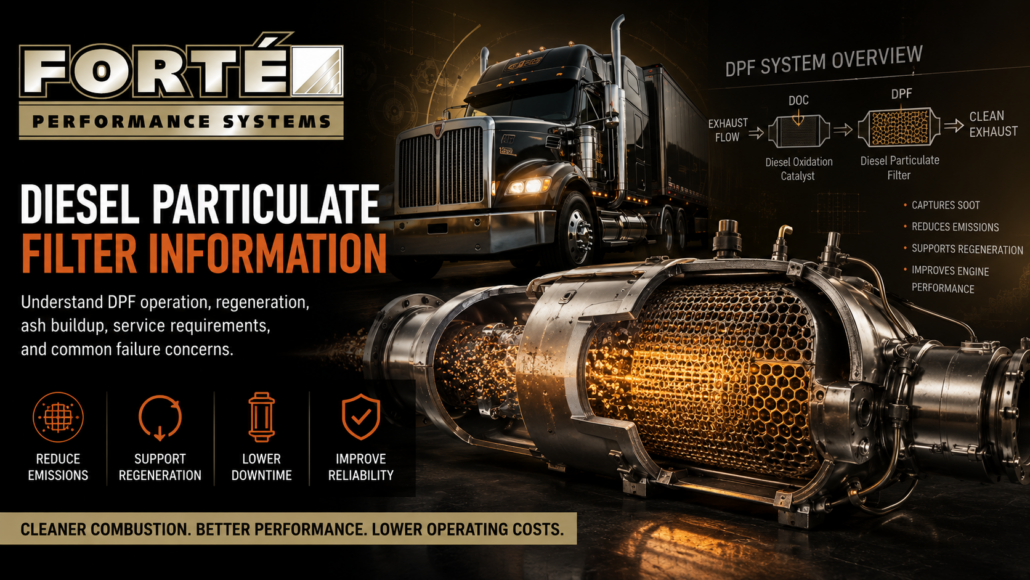
Diesel Particulate
Filter Information
Understanding how DPF systems work, why regeneration matters, and what causes costly service issues in modern diesel engines.
DPF Systems Help Reduce:
- Particulate matter
- Diesel exhaust smoke
- Carbon buildup
- Unburned fuel residue
- Excessive emissions output
What Is a Diesel Particulate Filter?
A Diesel Particulate Filter, or DPF, is part of the exhaust after-treatment system used in modern diesel engines. It captures particulate matter from engine exhaust and removes it through a cleaning process known as regeneration.
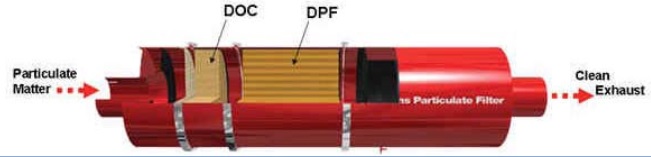
DOC
Diesel Oxidation Catalyst helps raise exhaust temperature and supports the regeneration process.
DPF
Captures particulate matter from exhaust and holds it until it can be oxidized.
EGR
Cooled exhaust gas recirculation helps reduce NOx emissions during diesel operation.
How DPF Regeneration Works
Passive Regeneration
Passive regeneration occurs when exhaust temperatures remain high enough during normal operation to continuously oxidize particulate matter inside the DPF.
This process happens automatically and does not normally affect machine operation.
Active Regeneration
Active regeneration happens when exhaust temperatures are not high enough to burn off collected particulate matter.
Additional fuel is introduced upstream of the DPF to raise exhaust temperature and oxidize the buildup.
Common DPF Service Concerns
Stationary Regeneration
Parked regeneration may be required when the DPF cannot clean itself during normal vehicle operation.
Ash Buildup
Ash is an incombustible residue from engine oil additives and cannot be fully removed through regeneration.
Cleaning Costs
DPF cleaning usually requires removal and approved service procedures, which can create downtime and added cost.
Replacement Risk
While DPF units are intended to last the life of the engine, real-world operating conditions can lead to premature failure.
DPF Performance Depends on Operating Conditions
Idling, low-load operation, poor fuel burn, soot buildup, and ash accumulation can all affect DPF performance. Understanding the system is the first step toward reducing downtime and controlling maintenance costs.